Why Shenzhen Became the Dental CAD/CAM Supply Base
Dental CAD/CAM is a clustered industry: castings, spindles, control boards and burs come from the same region. What that means for lead times, spare parts, and how to tell a designer from an assembler.
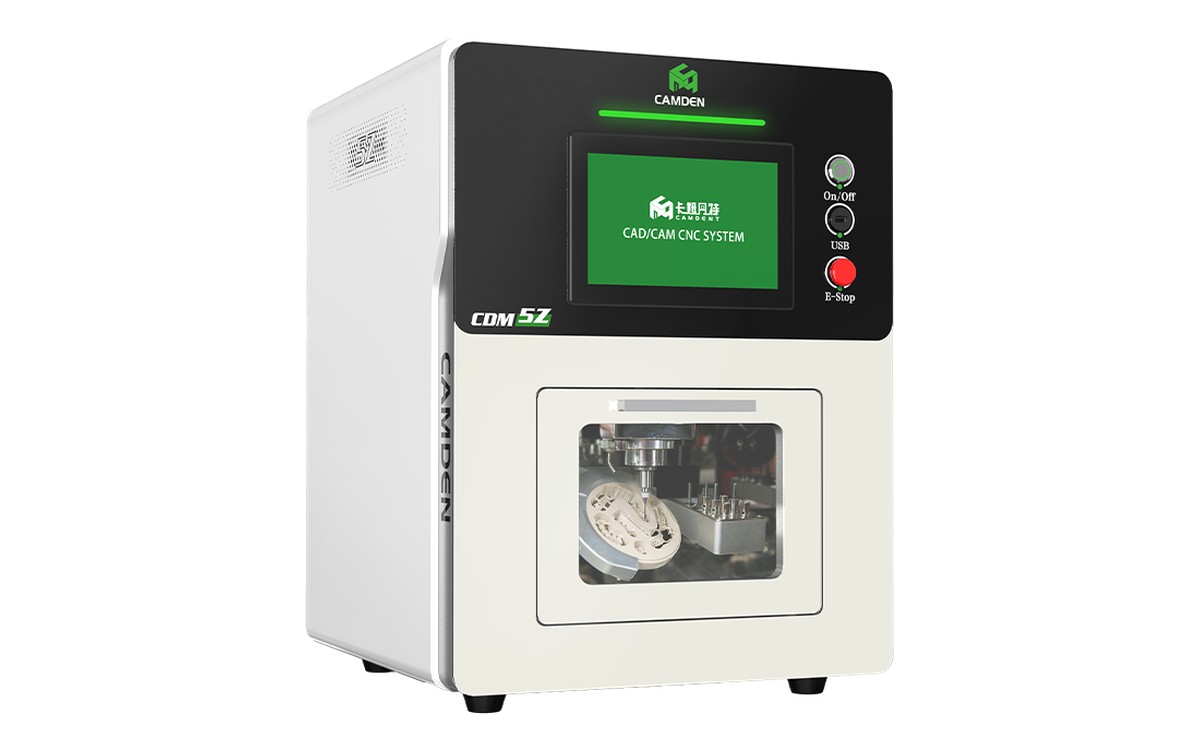
Dental CAD/CAM looks like a global industry and is in practice a clustered one. The castings, precision-machined parts, spindles, linear guides and control boards that make up a milling machine are produced within a short drive of each other in the Pearl River Delta. That density, more than labour cost, is what shapes lead times.
A five-axis dental mill draws on four supply chains at once: castings and machining, motion components such as the spindle, guides and ballscrews, electronics and firmware, and dental-specific parts such as fixtures, tool changers and burs. When all four sit in the same region, a change to a fixture or a nesting strategy can be tested in days instead of in a quarterly engineering cycle.
For a laboratory or a distributor this shows up in three places. Spare parts arrive in days, not months. A custom configuration — voltage, interface language, firmware behaviour, a different chuck — is a production change rather than a new project. And when something goes wrong, the engineer who designed the board can stand next to the machine.
A Shenzhen origin is not by itself a quality signal. The region contains both companies that design their own mechanics, control board and CAM post-processor, and companies that assemble bought-in kits. Three questions separate them: who designed the control board, who wrote the post-processor for your CAM software, and which spindle and guideways are inside. Ask for part numbers rather than adjectives.
Verification follows the same logic. Start with a live video call at the machine, visit the plant if you can, then cut your own STL. A supplier who is confident about the mechanics will hand you the sample and let you measure the margin yourself. Ask for the spare-parts list with prices and a written response-time commitment before you sign, not after.
A note on timing: Shenzhen hosts the 33rd APEC Economic Leaders' Meeting on 18–19 November 2026, and the city receives a large number of business delegations that week. If your travel already brings you to Shenzhen, a factory visit is worth half a day. We are in Guangming District and our machines stay set up for test cuts.