Dry vs Wet Dental Milling: How to Choose
Dry milling wins on speed and cleanliness for zirconia; wet milling protects glass ceramic and metals. Here is how to decide for your case mix.
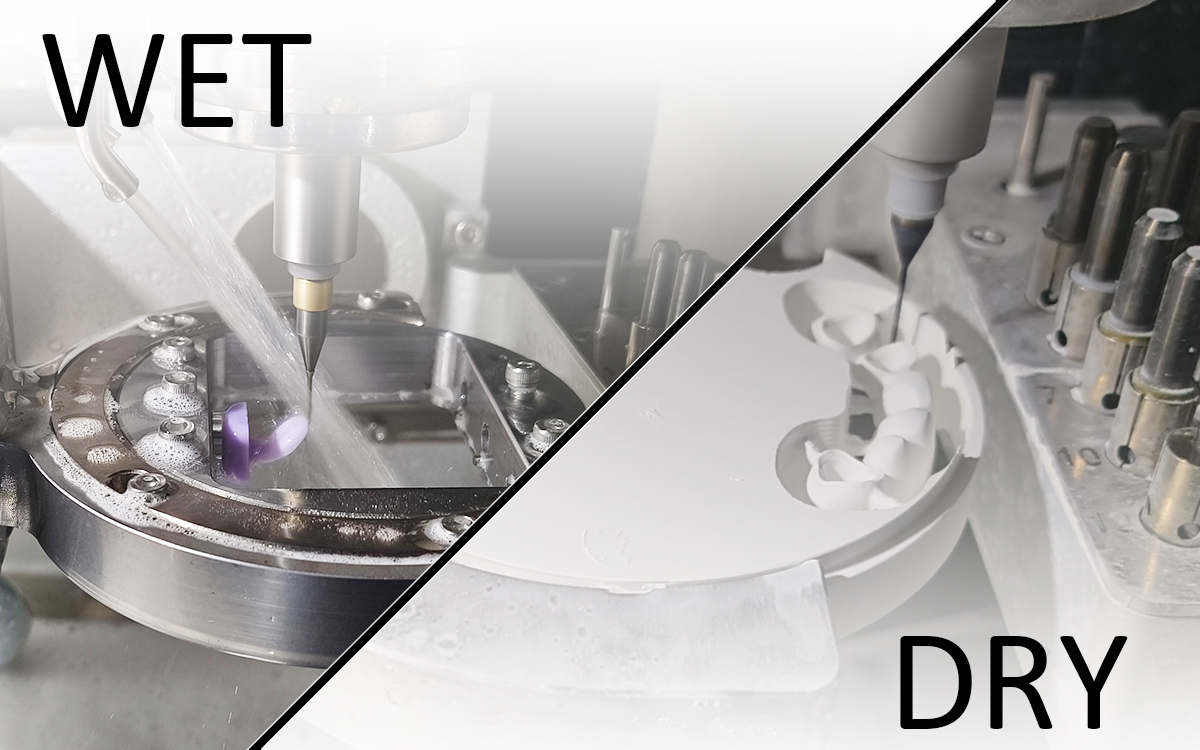
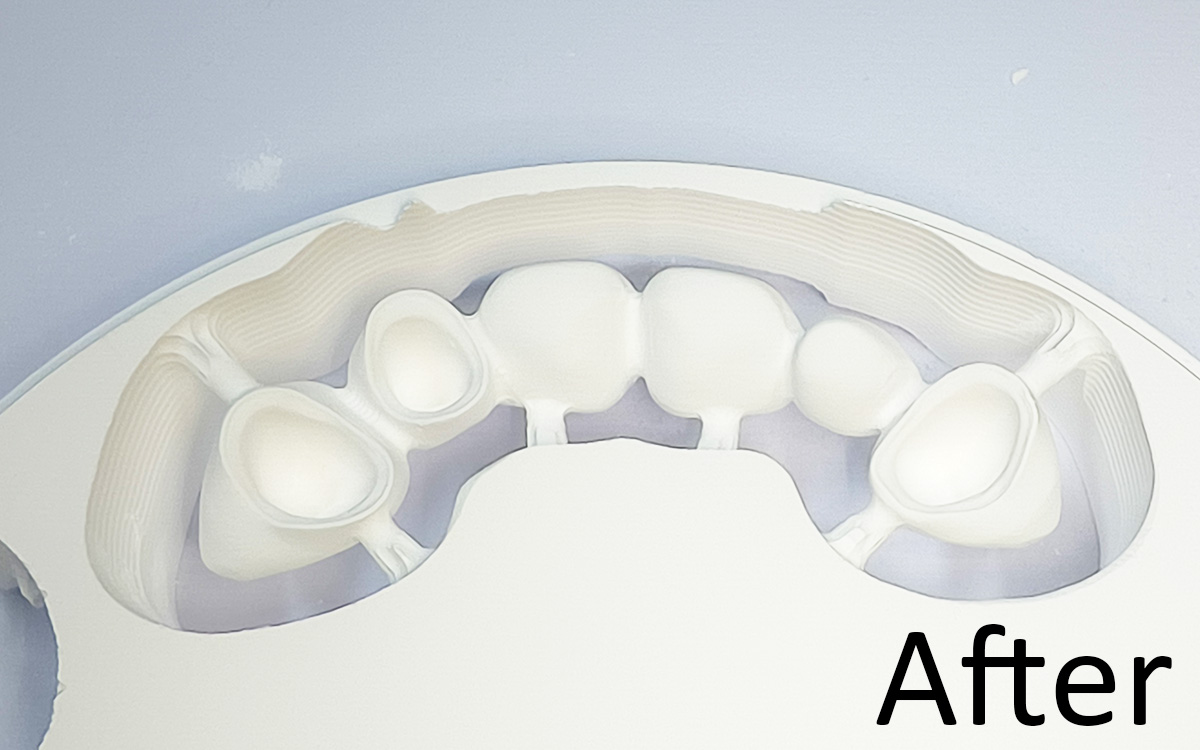
Dry milling removes material with compressed air and a vacuum system. It keeps the workpiece clean, avoids slurry handling and lets you nest several units on one disc without coolant contamination. For zirconia it is the default choice: a single crown takes 8–12 minutes and the bur lasts noticeably longer than in wet mode.
Wet milling floods the cutting zone with coolant. It keeps glass ceramic and metals below their damage threshold, which is the only way to avoid micro-cracks in lithium disilicate and to keep titanium workable. The trade-off is slower cycles, liquid waste and more cleaning time.
A practical rule for mixed laboratories: run zirconia, PMMA, wax and PEEK dry, and reserve a wet kit for glass ceramic, CoCr and titanium. On the SDM6T the wet kit installs in about 30 minutes, so a single machine can cover both workflows in one day.