4-Axis vs 5-Axis Dental Milling: Which Do You Need?
One extra axis changes the cases you can accept. Here is how to match the kinematics to your workload, not your wish list.
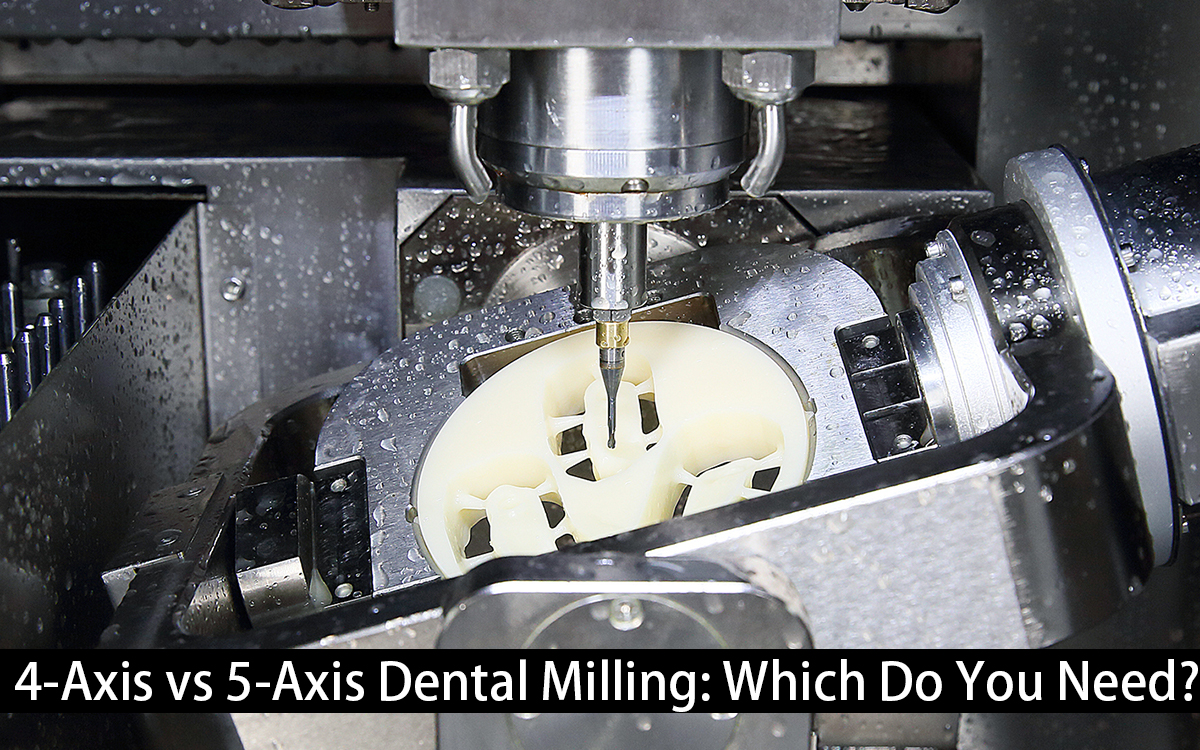
A 4-axis mill rotates the blank around a single rotary axis and is excellent for single crowns, inlays and small bridges. It is fast, simple and affordable — the right first machine for a lab that mostly mills zirconia crowns and PMMA temporaries.
A true 5-axis machine adds spindle tilt, typically ±30° on the B-axis. That extra freedom reaches deep undercuts, milled screw-retained bridges, angled abutments and full-arch implant bars without manual repositioning. It also improves surface quality on steep walls and fine anterior texture.
Rule of thumb: if your daily mix is 80% single units and you rarely do full-arch, start with 4-axis and grow later. If you regularly take multi-unit, implant or full-arch work, buy 5-axis now — retrofitting a workflow is more expensive than choosing the right kinematics once.